Thursday 19th February 2026.
Today, as we present our findings, embedded in all of this is the failure to manage risk. Particularly, “specified risk material”, and the lack of credible oversight.
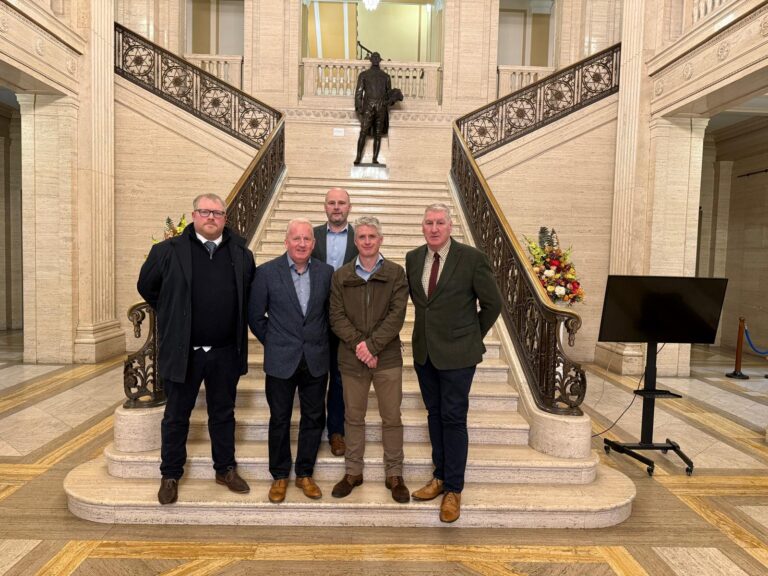
I am the secretary of FASTA.(Foyle Association of Salmon and Trout Anglers). We are an overarching angling body, which for decades, has acted on behalf of our affiliate members on agreed strategic problems.
Our affiliates are community-based angling clubs and private fisheries on the River and Lough Foyle system totalling 4000 anglers.
These include, Omagh anglers, Sion mills anglers, Gaff anglers Ardstraw anglers Finn anglers, Dennet anglers, Derg valley community angling club, River Roe angling Association, Strabane and Lifford anglers.
Private fisheries include, Abercorn estates, Brookeborough estates, Glenmore estate, Cloghan fisheries, Killygordon anglers, Mulvin fishery, Fedens fisheries, Beatties fishery, Carrickmore anglers, Strabane angling Association and Beltrim estates.
Our FASTA pollution working group is drawn from the following fields of experience: Civil service management grades, Engineering professionals, legal professionals, executive level management, consultants and tourism business & angling professionals.
Detailed research has been undertaken in the past five months. This has included consultation with community based groups affected by pollution. University academics with published research in the field of environment and pollution. Management of fisheries experiencing serious pollution, solutions, and academic accreditation.
Our consultation has also included meetings with stakeholders such as, Ulster farmers Union, Lough’s agency senior management, LA scientific practitioners, LA fishery officers, NIEA investigators and support staff. Northern Ireland water practitioners (Omagh and Fermanagh council employees). Lastly, Office for environmental protection.
We have also reached out to other important stakeholders such as, Lakeland Dairies Ltd and senior management within DAERA. Despite several attempts to secure meetings, promises have yet to be formalised.
Today, we do not intend to regurgitate independent academic presentations and conclusions in respect of pollution, net zero schemes, climate change. But our research reference includes:
- January 2016 NIAR 691-15 Ms Suzi Cave and Mr Des McKibbin. River pollution in Northern Ireland. An overview of causes and monitoring systems with examples of preventative measures.
- July 2021 NIAR 176-21 Mr Daryl Hughes. Lough Foyle opportunities and challenges for cross border marine management.
- Foyle fisheries act 1952.
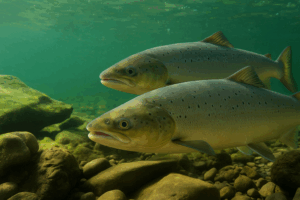
- UK protected habitat regulations. Lough /River Foyle special area of conservation and positive obligation under law to protect the genetically distinct Atlantic salmon population.
- Office for environmental protection. independent review of our environmental governance in Northern Ireland. October 2025.
- NIEA significant water management issues report. 2025.
- Water framework directive including river basin management plan.
- Regulation of anaerobic digesters in Northern Ireland.
- Digestive PAS110 standard in Northern Ireland.
- Northern Ireland Audit office: Water quality in Northern Ireland rivers and lakes 2024.
- The nutrients action programme (NAP) Regulations Northern Ireland 2026.
- Barry fox chief executive inland fisheries Ireland report to the joint committee on climate environment and energy 30th of September 2025. Including Dr Fiona Kelly Head of research Inland fisheries Ireland and Sean long South West River basin Director. River Blackwater County Cork, pollution incident 2025.
- Loughs Agency statement reference: Salmon regulations on the river Foyle system.11th/12th of February 2026. 63% reduction of Atlantic salmon in the Foyle system.
Clearly, the Government has serious challenges to protect the River/Lough Foyle from the increasing threats posed by man-made pollution.
Our community has layers of government bodies’, agencies & internal departments that should be able to adequately protect the River Foyle and its tributaries from pollution. However, the job seems increasingly difficult. The schemes causing the greatest concerns continue to be approved and output continues to rise at an alarming rate.
Structures to Control, mitigate, and investigate cannot cope with the strain. Ineffective Resource to risk, is compounding their inability to operate a professional risk management model.
There seems a gap in planning office risk management, implementation, regulation, inspection and oversight .
The Government policy of derogation important elements of process that facilitate schemes only illuminate the need for robust transparency, risk control and accountability. As we progress deeper into net zero schemes it is inevitable that catastrophic environmental outcomes will result.
There is corporate failure to reduce the strain on the environment from the identified risks from pollution. The failure to fully accept and manage rests with the Minister and his executive and operational arm DAERA.
The criminal justice outcomes serve as an additional evidence of government neglect and failure. Penalties for pollution are totally inadequate, and regulations outdated by decade’s.
This draws severe criticism within our community and includes judiciary criticism within Northern Ireland itself.
We have no doubt that a fixed penalty scheme will be rolled out. This will only serve to off set the need to deal properly with the problems. It will be used to generate positive statistics to meet ineffective targets
What is it actually going to take for the you to listen to the community affected by environmental pollution. This is a real time crisis.
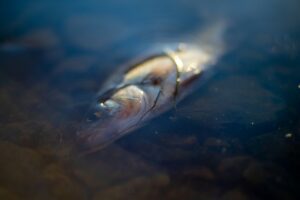
Lough Neagh is now beyond redemption. But is the River Foyle and Lough the next victim.
This body we sit before today and it’s political representation need to get serious about pollution time has run out.